Discovering water dripping through a ceiling or staining an upper-story wall after a heavy storm is one of the most stressful experiences a property owner can face. Water intrusion is relentless; once it breaches the outer protective barrier of a building, it moves quietly through insulation, saturates timber framing, and ruins interior finishes. The immediate impulse for most homeowners is to find the fastest, cheapest fix possible to stop the leak. However, reacting purely out of urgency often leads to poor long-term financial decisions.
When water damages a roof assembly, property owners are confronted with a critical question: Should you patch the affected area with a targeted fix, or is it time to invest in a complete overhaul? Choosing between these two paths requires balancing immediate out-of-pocket costs against the long-term equity, safety, and lifespan of your entire building. A quick patch on an aging or structurally compromised roof may save money today, but it frequently leads to repeated leaks, hidden rot, and far more expensive structural issues down the road.
Determining the most cost-effective call requires an objective analysis of several factors. You must evaluate the true depth of the water infiltration, the structural condition of the underlying wooden decking, the age of the existing system, and the overall economics of repair versus replacement. By taking a systematic approach to assessing damage, you can protect your property, maximize your insurance coverage, and make an informed investment that secures your building for decades to come.
Evaluating the Severity and Reach of Water Infiltration

The first step in making a smart financial decision after a leak is understanding that the point where water drips into your living room rarely aligns with the exact location where it entered the roof. Water is opportunistic. It enters through a cracked shingle, a compromised flashing seam, or an unsealed vent pipe high on the slope, then travels along rafters, underlayment, and ceiling joists before finally accumulating and breaking through drywall.
To accurately assess the scope of water damage, an inspection must extend far beyond a quick look at the top layer of shingles. The attic space serves as the primary diagnostic window for the health of your overhead assembly. It reveals the true reach of water infiltration long before signs appear on interior ceilings.
- Trace Gravity Paths: Look along the undersides of rafters and roof sheathing for dark water trails, white mineral crusts, or active dripping during or immediately after rainfall.
- Inspect Insulation Integrity: Check fiberglass batts or blown-in cellulose for compaction, clumping, discoloration, or foul odors. Wet insulation loses its thermal resistance and traps moisture against wooden ceiling joists.
- Check Rafters and Trusses: Examine structural timbers for soft spots, surface mold, or dark staining that indicates long-term or repeated exposure to moisture.
If water infiltration is isolated to a single entry point—such as a displaced vent boot or a small cluster of wind-torn shingles—and the surrounding attic structure remains dry and sound, a targeted patch is usually a viable, cost-effective solution. However, if water has spread broadly across multiple rafter bays or saturated large areas of insulation, the issue is systemic and demands a deeper evaluation.
Assessing Decking Integrity and Structural Rot
The shingles or metal panels you see from the street are merely the primary weather shield of your building. Beneath those surface materials lies the structural foundation of the system: the roof decking, typically constructed from plywood or oriented strand board (OSB) panels. When water penetrates the outer layer and sits trapped against the decking, the wood absorbs moisture, swells, and eventually rots.
Attempting a superficial fix over rotted or saturated decking is one of the most expensive mistakes a property owner can make. While localized shingle fixes are inexpensive, attempting a simple roof repair over rotted sheathing only traps moisture inside, accelerating timber decay and creating an ideal environment for toxic mold growth.
Professional roofers always strip back damaged outer sections during an assessment to verify decking strength before recommending a repair path. They use specific field tests to determine whether the wooden foundation can still securely hold roofing nails and support heavy loads.
Firm, dry decking shows no discoloration, holds nails tight, and has zero flex under weight, meaning you can proceed with a localized patch or shingle replacement. Discolored or damp decking with dark water staining, elevated moisture readings, or minor surface mold requires drying out thoroughly, treating timber, and replacing affected underlayment. Rotted or delaminated decking with soft spots, a spongy feel underfoot, or flaking wood demands a complete tear-off of damaged sections and structural panel replacement.
If an inspector discovers that large sections of the plywood decking have softened, delaminated, or sprouted fungal growth, simply layering new shingles on top is impossible. The compromised decking must be cut out and replaced. When structural rot spans multiple panels, the labor required to perform surgical deck repairs often approaches the cost of a full tear-off, tilting the financial balance toward a complete replacement.
The 50% Rule: Age, System Lifespan, and Repair Thresholds
Every roofing material operates on a finite clock. Standard three-tab asphalt shingles generally last 15 to 20 years, architectural shingles last 25 to 30 years, and metal or tile systems can endure for 40 to 50 years or more. As a system ages, its constituent materials lose elasticity, granules wash away, and seals beneath thermal bonds weaken.
When water damage occurs on an older system, you must apply the “50% Rule” of home maintenance. If a roof has exceeded 50% to 60% of its expected service lifespan, or if the estimated cost of localized restoration exceeds 30% of the price of a brand-new installation, a full replacement is almost always the more economical long-term choice.
Reputable roofing contractors use thermal cameras and moisture meters to map hidden moisture pockets before presenting replacement quotes, giving property owners an exact visual representation of system saturation. Choosing full roof replacements when systems are near the end of their operational lifespan prevents recurring interior water damage and resets your building’s structural protection clock back to zero.
- Under 10 Years Old: If the assembly is relatively new, decking is solid, and damage is limited to less than 20% of the surface, opt for targeted restoration.
- 10 to 15 Years Old: Evaluate granule loss and overall flexibility. If shingles are brittle and cracking, patching one area often breaks surrounding shingles during installation.
- 15+ Years Old: Material degradation makes spot patches unreliable. Investing money into a system nearing total failure provides poor financial return compared to a full overhaul.
Interior Restoration and Structural Secondary Risks
When evaluating the total cost of water damage, focusing solely on the overhead assembly covers only half the financial equation. Water that breaches the top barrier cascades downward, soaking attic insulation, destroying ceiling drywall, rusting electrical junction boxes, and running down interior wall cavities.
If left unaddressed, trapped moisture creates secondary hazards that extend far beyond cosmetic paint peeling. Saturated ceiling drywall can collapse under the weight of trapped water, posing severe safety risks to occupants. Furthermore, water that trickles all the way down to the foundation level can pool along perimeter walls, eroding soil stability and exacerbating basement seepage.
Partnering with certified water damage companies ensures wet ceiling materials, soaked insulation, and damp wall cavities are dried using industrial dehumidifiers and air movers before micro-organisms take hold. Meanwhile, unmanaged runoff from failing eaves or broken drainage pathways can cause water to pool around building footings, where hydrostatic pressure can eventually lead to costly foundation repairs.
When managing interior water damage, start by carefully poking a small hole in sagging ceiling drywall over a bucket to relieve standing water weight and prevent sudden collapse. Next, pull out saturated fiberglass or cellulose insulation from affected attic bays to allow framing timbers to dry out completely. Deploy commercial air movers and LGR dehumidifiers to reduce moisture content in structural studs below 15%, and have a licensed electrician check any junction boxes, light fixtures, or wiring harnesses exposed to water flow.
Calculating the full financial picture requires adding the cost of interior demolition, drying, mold remediation, and drywall reconstruction to your exterior estimates. If a failing exterior system threatens to cause thousands of dollars in recurring interior damage, committing to a complete exterior upgrade protects the capital you invest in interior finishes.
Commercial & Multi-Unit Property Considerations
Managing water damage on commercial buildings, industrial facilities, and multi-family residential complexes involves distinct technical and operational challenges. Unlike single-family homes with pitched asphalt roofs, commercial structures often feature low-slope or flat membrane systems—such as TPO, EPDM, or modified bitumen—covering vast square footage.
On a multi-family property, a water breach does not just affect one living space; it can damage multiple stacked tenant units, destroy personal property, and lead to significant rent loss or legal liability. Property managers must balance the immediate need to maintain habitable conditions for residents against long-term capital expenditure budgets.
Utilizing specialized multifamily roofing services helps property managers coordinate phased repairs or full section replacements across large apartment complexes while maintaining strict safety standards for residents. Following major structural work, hiring a commercial cleaning service removes hazardous drywall dust, fiberglass particles, and construction debris from tenant living spaces, ensuring a smooth transition back to normal operations.
- Infrared Moisture Surveys: Commercial property owners should utilize thermal drone imaging or handheld infrared scans to map subsurface moisture in flat roof insulation boards before deciding between spot patching and full re-roofing.
- Tenant Communication Plans: Clear notice schedules minimize friction when staging heavy equipment, cranes, and tear-off dumpsters in shared residential parking areas.
- Preventative Maintenance Contracts: Establishing formal inspection schedules twice a year catches membrane seam separations, clogged scuppers, and flashing cracks long before they cause major interior flooding.
When subsurface insulation boards across a large flat roof become waterlogged, spot-repairing the top membrane leaves trapped water sealed inside the assembly. That trapped moisture slowly rots steel or wood decking from within, destroys thermal efficiency, and eventually forces a complete tear-off. In such cases, full replacement with updated drainage slopes is the only fiscally responsible path.
Vetting Contractors and Evaluating Warranties
Whether your assessment points toward a targeted repair or a complete replacement, the ultimate success of the project rests on the quality of the workmanship. Water is unforgiving; even the highest-grade materials will fail if flashings are installed improperly, underlayment seams are lapped backwards, or fasteners are over-driven.
Selecting the right professional requires looking beyond the lowest bid. In the wake of major weather events, unvetted or out-of-state operators often flood affected neighborhoods offering quick, cheap fixes. Hiring unqualified labor frequently results in voided manufacturer warranties and improper installations that leak again during the next heavy rainfall.
Choosing an established roofing contractor guarantees that factory material warranties remain fully valid and that local building codes are meticulously followed. Comparing detailed, written quotes from multiple licensed roofing companies prevents overpaying during post-storm emergency demand spikes while ensuring you receive a realistic assessment of your building’s needs.
Always verify that contractors hold a valid state license, active general liability insurance, and full workers’ compensation coverage to protect you from legal liability if a worker is injured on-site. Require a detailed written scope of work with line items for tear-off, decking replacement per sheet, underlayment grade, and flashing materials to prevent unexpected change orders mid-project. Finally, ensure a clear distinction between manufacturer material coverage (typically 20 to 50 years) and contractor workmanship guarantees (2 to 10 years) so labor defects are explicitly covered.
Always insist on a written contract that explicitly outlines the scope of work, material brands, cleanup procedures, and payment schedules. A trustworthy professional will happily walk you through their assessment, show you photo evidence of the damage, and explain why they recommend a specific course of action.
Remember that the cheapest upfront estimate is rarely the most cost-effective solution over a ten-year horizon. Patching a severely degraded or rotted assembly only buys temporary time while allowing hidden structural decay to spread beneath the surface. Conversely, investing in a complete replacement when a system is genuinely past its prime protects your building, preserves interior finishes, and establishes a secure, watertight barrier that lasts for decades.
Take a proactive approach to property care. Inspect your attic space after major storms, address minor flashing or shingle issues promptly, and partner with qualified, licensed professionals whenever water threatens your building. Protecting your overhead shield today ensures your home or commercial building stays safe, dry, and valuable for years to come.
Discovering water dripping through a ceiling or staining an upper-story wall after a heavy storm is one of the most stressful experiences a property owner can face. Water intrusion is relentless; once it breaches the outer protective barrier of a building, it moves quietly through insulation, saturates timber framing, and ruins interior finishes. The immediate impulse for most homeowners is to find the fastest, cheapest fix possible to stop the leak. However, reacting purely out of urgency often leads to poor long-term financial decisions.
When water damages a roof assembly, property owners are confronted with a critical question: Should you patch the affected area with a targeted fix, or is it time to invest in a complete overhaul? Choosing between these two paths requires balancing immediate out-of-pocket costs against the long-term equity, safety, and lifespan of your entire building. A quick patch on an aging or structurally compromised roof may save money today, but it frequently leads to repeated leaks, hidden rot, and far more expensive structural issues down the road.
Determining the most cost-effective call requires an objective analysis of several factors. You must evaluate the true depth of the water infiltration, the structural condition of the underlying wooden decking, the age of the existing system, and the overall economics of repair versus replacement. By taking a systematic approach to assessing damage, you can protect your property, maximize your insurance coverage, and make an informed investment that secures your building for decades to come.
Evaluating the Severity and Reach of Water Infiltration
The first step in making a smart financial decision after a leak is understanding that the point where water drips into your living room rarely aligns with the exact location where it entered the roof. Water is opportunistic. It enters through a cracked shingle, a compromised flashing seam, or an unsealed vent pipe high on the slope, then travels along rafters, underlayment, and ceiling joists before finally accumulating and breaking through drywall.
To accurately assess the scope of water damage, an inspection must extend far beyond a quick look at the top layer of shingles. The attic space serves as the primary diagnostic window for the health of your overhead assembly. It reveals the true reach of water infiltration long before signs appear on interior ceilings.
- Trace Gravity Paths: Look along the undersides of rafters and roof sheathing for dark water trails, white mineral crusts, or active dripping during or immediately after rainfall.
- Inspect Insulation Integrity: Check fiberglass batts or blown-in cellulose for compaction, clumping, discoloration, or foul odors. Wet insulation loses its thermal resistance and traps moisture against wooden ceiling joists.
- Check Rafters and Trusses: Examine structural timbers for soft spots, surface mold, or dark staining that indicates long-term or repeated exposure to moisture.
If water infiltration is isolated to a single entry point—such as a displaced vent boot or a small cluster of wind-torn shingles—and the surrounding attic structure remains dry and sound, a targeted patch is usually a viable, cost-effective solution. However, if water has spread broadly across multiple rafter bays or saturated large areas of insulation, the issue is systemic and demands a deeper evaluation.
Assessing Decking Integrity and Structural Rot
The shingles or metal panels you see from the street are merely the primary weather shield of your building. Beneath those surface materials lies the structural foundation of the system: the roof decking, typically constructed from plywood or oriented strand board (OSB) panels. When water penetrates the outer layer and sits trapped against the decking, the wood absorbs moisture, swells, and eventually rots.
Attempting a superficial fix over rotted or saturated decking is one of the most expensive mistakes a property owner can make. While localized shingle fixes are inexpensive, attempting a simple roof repair over rotted sheathing only traps moisture inside, accelerating timber decay and creating an ideal environment for toxic mold growth.
Professional roofers always strip back damaged outer sections during an assessment to verify decking strength before recommending a repair path. They use specific field tests to determine whether the wooden foundation can still securely hold roofing nails and support heavy loads.
Firm, dry decking shows no discoloration, holds nails tight, and has zero flex under weight, meaning you can proceed with a localized patch or shingle replacement. Discolored or damp decking with dark water staining, elevated moisture readings, or minor surface mold requires drying out thoroughly, treating timber, and replacing affected underlayment. Rotted or delaminated decking with soft spots, a spongy feel underfoot, or flaking wood demands a complete tear-off of damaged sections and structural panel replacement.
If an inspector discovers that large sections of the plywood decking have softened, delaminated, or sprouted fungal growth, simply layering new shingles on top is impossible. The compromised decking must be cut out and replaced. When structural rot spans multiple panels, the labor required to perform surgical deck repairs often approaches the cost of a full tear-off, tilting the financial balance toward a complete replacement.
The 50% Rule: Age, System Lifespan, and Repair Thresholds
Every roofing material operates on a finite clock. Standard three-tab asphalt shingles generally last 15 to 20 years, architectural shingles last 25 to 30 years, and metal or tile systems can endure for 40 to 50 years or more. As a system ages, its constituent materials lose elasticity, granules wash away, and seals beneath thermal bonds weaken.
When water damage occurs on an older system, you must apply the “50% Rule” of home maintenance. If a roof has exceeded 50% to 60% of its expected service lifespan, or if the estimated cost of localized restoration exceeds 30% of the price of a brand-new installation, a full replacement is almost always the more economical long-term choice.
Reputable roofing contractors use thermal cameras and moisture meters to map hidden moisture pockets before presenting replacement quotes, giving property owners an exact visual representation of system saturation. Choosing full roof replacements when systems are near the end of their operational lifespan prevents recurring interior water damage and resets your building’s structural protection clock back to zero.
- Under 10 Years Old: If the assembly is relatively new, decking is solid, and damage is limited to less than 20% of the surface, opt for targeted restoration.
- 10 to 15 Years Old: Evaluate granule loss and overall flexibility. If shingles are brittle and cracking, patching one area often breaks surrounding shingles during installation.
- 15+ Years Old: Material degradation makes spot patches unreliable. Investing money into a system nearing total failure provides poor financial return compared to a full overhaul.
Interior Restoration and Structural Secondary Risks
When evaluating the total cost of water damage, focusing solely on the overhead assembly covers only half the financial equation. Water that breaches the top barrier cascades downward, soaking attic insulation, destroying ceiling drywall, rusting electrical junction boxes, and running down interior wall cavities.
If left unaddressed, trapped moisture creates secondary hazards that extend far beyond cosmetic paint peeling. Saturated ceiling drywall can collapse under the weight of trapped water, posing severe safety risks to occupants. Furthermore, water that trickles all the way down to the foundation level can pool along perimeter walls, eroding soil stability and exacerbating basement seepage.
Partnering with certified water damage companies ensures wet ceiling materials, soaked insulation, and damp wall cavities are dried using industrial dehumidifiers and air movers before micro-organisms take hold. Meanwhile, unmanaged runoff from failing eaves or broken drainage pathways can cause water to pool around building footings, where hydrostatic pressure can eventually lead to costly foundation repairs.
When managing interior water damage, start by carefully poking a small hole in sagging ceiling drywall over a bucket to relieve standing water weight and prevent sudden collapse. Next, pull out saturated fiberglass or cellulose insulation from affected attic bays to allow framing timbers to dry out completely. Deploy commercial air movers and LGR dehumidifiers to reduce moisture content in structural studs below 15%, and have a licensed electrician check any junction boxes, light fixtures, or wiring harnesses exposed to water flow.
Calculating the full financial picture requires adding the cost of interior demolition, drying, mold remediation, and drywall reconstruction to your exterior estimates. If a failing exterior system threatens to cause thousands of dollars in recurring interior damage, committing to a complete exterior upgrade protects the capital you invest in interior finishes.
Commercial & Multi-Unit Property Considerations
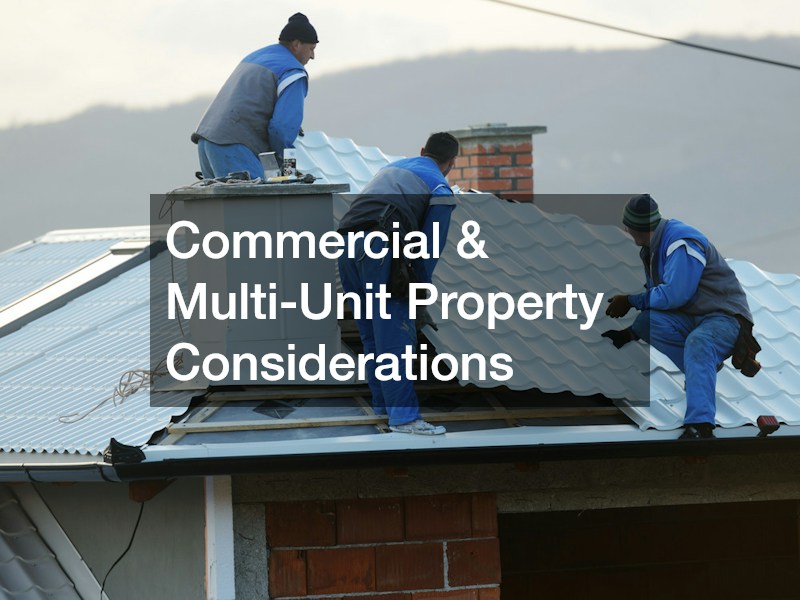
Managing water damage on commercial buildings, industrial facilities, and multi-family residential complexes involves distinct technical and operational challenges. Unlike single-family homes with pitched asphalt roofs, commercial structures often feature low-slope or flat membrane systems—such as TPO, EPDM, or modified bitumen—covering vast square footage.
On a multi-family property, a water breach does not just affect one living space; it can damage multiple stacked tenant units, destroy personal property, and lead to significant rent loss or legal liability. Property managers must balance the immediate need to maintain habitable conditions for residents against long-term capital expenditure budgets.
Utilizing specialized multifamily roofing services helps property managers coordinate phased repairs or full section replacements across large apartment complexes while maintaining strict safety standards for residents. Following major structural work, hiring a commercial cleaning service removes hazardous drywall dust, fiberglass particles, and construction debris from tenant living spaces, ensuring a smooth transition back to normal operations.
- Infrared Moisture Surveys: Commercial property owners should utilize thermal drone imaging or handheld infrared scans to map subsurface moisture in flat roof insulation boards before deciding between spot patching and full re-roofing.
- Tenant Communication Plans: Clear notice schedules minimize friction when staging heavy equipment, cranes, and tear-off dumpsters in shared residential parking areas.
- Preventative Maintenance Contracts: Establishing formal inspection schedules twice a year catches membrane seam separations, clogged scuppers, and flashing cracks long before they cause major interior flooding.
When subsurface insulation boards across a large flat roof become waterlogged, spot-repairing the top membrane leaves trapped water sealed inside the assembly. That trapped moisture slowly rots steel or wood decking from within, destroys thermal efficiency, and eventually forces a complete tear-off. In such cases, full replacement with updated drainage slopes is the only fiscally responsible path.
Vetting Contractors and Evaluating Warranties

Whether your assessment points toward a targeted repair or a complete replacement, the ultimate success of the project rests on the quality of the workmanship. Water is unforgiving; even the highest-grade materials will fail if flashings are installed improperly, underlayment seams are lapped backwards, or fasteners are over-driven.
Selecting the right professional requires looking beyond the lowest bid. In the wake of major weather events, unvetted or out-of-state operators often flood affected neighborhoods offering quick, cheap fixes. Hiring unqualified labor frequently results in voided manufacturer warranties and improper installations that leak again during the next heavy rainfall.
Choosing an established roofing contractor guarantees that factory material warranties remain fully valid and that local building codes are meticulously followed. Comparing detailed, written quotes from multiple licensed roofing companies prevents overpaying during post-storm emergency demand spikes while ensuring you receive a realistic assessment of your building’s needs.
Always verify that contractors hold a valid state license, active general liability insurance, and full workers’ compensation coverage to protect you from legal liability if a worker is injured on-site. Require a detailed written scope of work with line items for tear-off, decking replacement per sheet, underlayment grade, and flashing materials to prevent unexpected change orders mid-project. Finally, ensure a clear distinction between manufacturer material coverage (typically 20 to 50 years) and contractor workmanship guarantees (2 to 10 years) so labor defects are explicitly covered.
Always insist on a written contract that explicitly outlines the scope of work, material brands, cleanup procedures, and payment schedules. A trustworthy professional will happily walk you through their assessment, show you photo evidence of the damage, and explain why they recommend a specific course of action.
Remember that the cheapest upfront estimate is rarely the most cost-effective solution over a ten-year horizon. Patching a severely degraded or rotted assembly only buys temporary time while allowing hidden structural decay to spread beneath the surface. Conversely, investing in a complete replacement when a system is genuinely past its prime protects your building, preserves interior finishes, and establishes a secure, watertight barrier that lasts for decades.
Take a proactive approach to property care. Inspect your attic space after major storms, address minor flashing or shingle issues promptly, and partner with qualified, licensed professionals whenever water threatens your building. Protecting your overhead shield today ensures your home or commercial building stays safe, dry, and valuable for years to come.